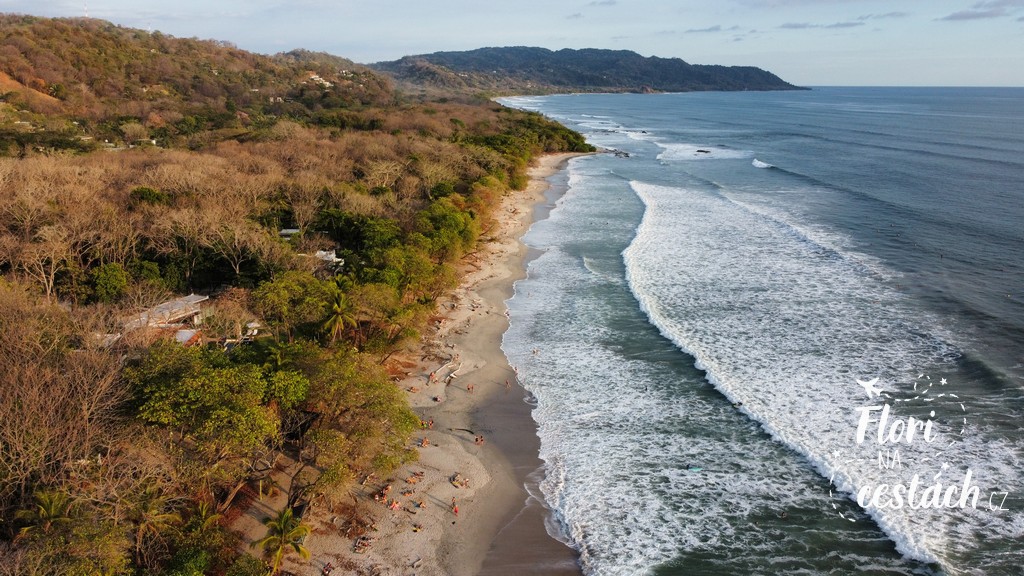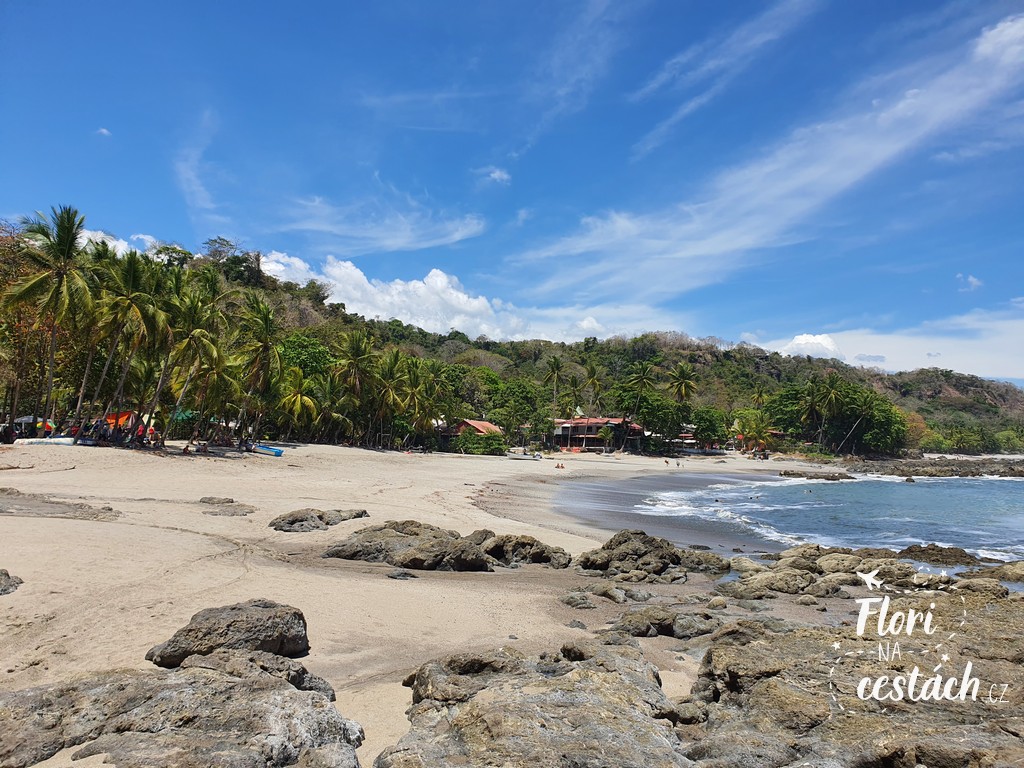

Costa Rica is a republic in Central America. The western coast is washed by the waters of the Pacific Ocean, the eastern by the Caribbean Sea. The total length of the Costa Rican coastline is 1,466 km. The backbone of the country is three mountain ranges that stretch continuously from northwest to southeast across the entire territory of the state. They are the Cordillera de Guanacaste, the Cordillera Central and the Cordillera de Talamanca. The highest mountain in Costa Rica is the 3,820-meter-high Mount Chirripó in the Cordillera de Talamanca. The territory of Costa Rica is 51% covered by forest. It is the only tropical country in the world (as of 2020) that has stopped deforestation and, on the contrary, is reforesting already deforested areas.
Over 500,000 species of animals and plants live and grow in Costa Rica, which is 6 % of the biodiversity of the entire planet, more than 12 % of land area is covered by Costa Rican national parks, three of which are listed as UNESCO World Heritage Sites. Climatic conditions vary in different parts of the country. There is a tropical rainforest climate, a tropical monsoon climate, a savanna climate with dry winters, a monsoon-influenced temperate oceanic climate, and a temperate oceanic climate. (source: Wikipedia)
Why Costa Rica
Simply because here you will see and find what you can't find at home. From one side of the country Caribbean well-being, on the other side of the Pacific with lots of vast and beautiful beaches, in the middle of the country volcanoes and rainforests with a lot wild animals.
These are just a few of the reasons to visit Costa Rica. If you go here, I think you you will not regret it. I spent a wonderful three weeks here and I definitely want to come back sometime. And what appealed to me so much, you will find out when you read on.
Before you set off on your journey, plan
How many days/weeks do you want to spend in Costa Rica? Where do you want to live? What do you want to do? There are many questions, and that is why it is important, in my opinion, to have a plan.
I think so. two weeks is not enough for Costa Rica, so start planning at least three right away. It's here so many interesting places and given the length of the flight here, it's worth staying longer.
Also, expect that even if you plan everything perfectly, something might not work out on the spot. Have alternatives.
It won't be a cheap trip.. Costa Rica is still in America. Although it will certainly be cheaper without a travel agency and you will definitely experience more than the travel agencies offer. Don't worry about having to take care of everything yourself. It's fine. Especially if you go, ideally, in groups of four. That way you can split the costs of the car and accommodation. So where do you start?
You can't plan this vacation overnight. It's going to take some work. Unless your plan is to just hang out on the beach and not move from one place the whole time. Then you don't need a plan, but you don't need to fly to Costa Rica either, right?
The term is the basis
May to November is not the best choice. It is the rainy season. January to April is ideal. That's warm and dry weather. Of course, it can vary depending on where you are. In the Caribbean it will probably be different than in the Pacific and it will be different in the central part on the top of a volcano or in the rainforest. We understand. We chose the second half of February and the first week of March. For us, the ideal date.
Air tickets

Once you have a rough date, it's time to book your flights. Check out skyscanner or google flights and find out what's flying to San Jose. No way But don't buy a plane ticket here.. For those of you who are less understanding, don't buy a ticket here! Just find out which airlines are currently offering flights here.
Then go. directly to the airline's website and then fine-tune it based on the price. Flights will probably be cheaper on Tuesdays than Fridays and so on, but you probably know that.
It's also better to buy the entire flight in one ticket, with one company. It has its advantages. You check in for the entire route on the first flight and you don't have to worry about anything. And if the flight is delayed and you don't make the connection, it's easier to deal with. Tips for buying airline tickets I wrote on the page How to get tickets, so take a look at her.
Costa Rica is about 10,000 km from us, so the flight will be long, so try to choose one of the shorter ones where you won't have to wait a day at the airport for a transfer. You don't want to waste time.
One, maximum two transfers is ideal. We chose KLM, the trip there Prague – Amsterdam – San Jose took about 15 hours, the return trip was from San Jose to Panama City, then to Amsterdam and Prague and thanks to 8 hours in Panama City it took about 23 hours. Priced under 18,000 CZK, including 23 kg of checked baggage, which we dropped off in Prague and picked up in San Jose.
Map
You have a date, you have your flights and now you would think it's time to find accommodation. But you think wrong. You will be here for at least three weeks, it is stupidity of living in one place. And it's also stupid to shoot blindly, because with the state of the roads and traffic, you could easily spend half your vacation on the road. Literally.
So different. It's time to plan what you want to see in those three weeks, and that's why you need a bloated guide. Don't imagine any muscleman, I mean the kind of book that has about 600 pages, and that you definitely don't want to read in the evenings. Right? I'll make it easier for you.. I've written down the best ones in my guide and will send it to you for free. Check out the page https://florinacestach.cz/eshop/pruvodce-kostarika and fill out the contact form. You will find lots of tips below.
So what about the plan? Once you've studied everything, mark on the map places you want to see and where you will move. Think about how many days, in which area you will spend and choose accommodation accordingly. There are plenty of them on booking and airbnb. Just choose. And what is definitely worth looking at is if at least one of the accommodation will have washing machine. Then you don't have to drag so many things from home...
Here it is my map:
Part One: The Caribbean
The flight is long, the jet lag is big, and the first thing you look forward to in February is... beach and swimming pool. That's why our first stop was straight to the Caribbean part of Costa Rica. To the quiet town of Puerto Viejo, which is located near the border with Panama.
We found a bungalow for accommodation Tini House, directly in the middle of the jungle and really close to the beach. Two bedrooms, bathroom, kitchen with dining table and a luxurious terrace. There are quite a few Nephilim (spider) around, but you get used to them in a few days (and I hate spiders).
In this area there are beautiful beaches (for example Playa Chiquita, Playa Cocles), where they jump above your head screamers and they fly parrots, you can visit Cahuita National Park (which we didn't do and I regret it to this day), because here you will come across, for example, sloths.
Further south, on the border with Panama, you can look into the rain forest. Manzanillo rainforest (for a voluntary admission fee). Here you will see wild boars (those little poisonous frogs), lots and lots of Nephila and other spiders and if you're lucky, you can enjoy the rainforest in the rain. Yes, it only rained here in the whole three weeks. But let's call it luck.
Jaguar Rescue Center

Definitely worth a visit and $22 rescue station Jaguar Rescue Center right in Puerto Viejo. In two hours you will learn a lot of interesting information and you will leave with admiration for the people who take care of injured animals here and do everything they can to return them to the wild. Even if it is not always possible.
The people who work here are volunteers (Lindsay from Canada guided us), the entire rescue station lives mainly on entrance fees and donations from sponsors. The government contributes nothing to the operation. It's touching. Every animal here has its own story and fate, and you leave with the feeling that you would rather stay here.
You also can't miss various local shops. Whether it's a roadside fruit stand where you can buy everything fresh and perfectly ripe (and you really can't get bananas, papaya, mango, pineapple or avocado like that here), or a local bistro where you would never say it's a bistro, but the taste of the food will completely shock you and take your taste buds to another, previously unknown state. Just don't expect a completely stainless steel kitchen, as is customary here... Not here.
Part Two: San Jose and Surrounding Areas

After the first few days of enjoying the sun, beaches and swimming, we moved about 200 km to central parts of Costa Rica, near the capitals San Jose and Cartago. The journey took about 4 hours, and since the crossings are really long, we stopped at Tapantí National Park – Macizo de la Muerte.
The park has 3 hiking trails that lead through the forest, and even though the hiking guide (yes, I read those 600 pages) promised that we would see many species of birds and other animals, we didn't see anything interesting other than the forest. So a bit of a disappointment. You can't trust the guides. But hey, we're in Costa Rica and that's an experience in itself.
Our second accommodation was in Casa Ángel Hospedaje Turístico, which was actually a family house where the owners rented out the lower floor. Two bedrooms, bathroom, kitchen, living room and a room with a washer and dryer. Foosball table and a hot tub on the terrace. Although it got colder compared to the Caribbean and there was no cold water in the hot tub, it was still beautiful.
And the view of the surroundings. Awesome. Especially in the morning with the sunrise. Yeah, thanks to the time difference you catch the sunrise every day. I mean, you're more like waiting for the sun to rise and the day to begin.
Irazú, Turrialba and Barva volcanoes

Irazu Volcano he is with his 3432 meters highest active stratovolcano located in Costa Rica (not the largest mountain, that is Cerro Chirripó with 3,820 meters). There is a fairly decent road to the top, you pay the entrance fee at the top, park, put on all the winter clothes you have from the Czech Republic and go look into the crater. Actually, into several. The largest has depth up to 300 meters, smaller around 100. The guide recommends arriving before ten in the morning, because then the clouds come. And this time the guide was right. We arrived earlier, but we already had a mix of sun, wind and clouds. But an incredible experience. The view, the atmosphere. It's worth it.
It is located about a kilometer lower in altitude. Irazú National Park – Prusia Sector. You will come across several marked hiking trails here that will take you into a perfect pine forest. Along the way, you will encounter plants that will make you wonder if you have returned to prehistoric times, and which you will definitely not see here. Beautiful. And for hiking lovers, one joy. Which is spoiled a bit by the fact that there is an entrance fee everywhere. So first you pay at the top to be able to look into the craters and then you pay another entrance fee here to the park. Hail America.
Not far from the Irazú volcano is an active Turrialba volcano, which rises to a height of 3340 meters. There are supposedly 3 craters at the top and one of them still has active chimneys. Unfortunately, we didn't get there because the volcano was a bit smoldering, so it was closed. Maybe next time.
Another volcano in this area is Color volcano in Braulio Carrillo National Park. We didn't see that one either. We arrived after ten o'clock (yes, the guide isn't kidding here either when he says, come early, after ten o'clock the clouds will come). They did. So instead of a flooded crater we saw about a meter of lake and white fog. However, the journey here was worth it. It leads through the misty forest, and it is the fog and haze that gives this forest its immense appeal.
Ruins of Ujarras
The last volcano we had planned in this area was Poas volcano. According to the guide, a beautiful crater, with an azure lake inside. But… 80 km of travel via Cartago and San Jose (we had already driven through it once and it was a long time) with the fact that you arrive at the top of the volcano by car, pay the entrance fee, park, look into the crater and drive again. So we decided that 4 hours in the car was not worth a 15-minute experience and gave up on Poás. Instead, we spent half a day in the hot tub and googled where else we could visit.
A few kilometers away we discovered ruins of the Catholic church of Nuestra Señora Concepción del Rescate de Ujarrás. Abbreviated Ruinas de Ujarrás. One of the oldest Catholic churches on the island (built in 1681-1693).
We tasted one of the traditional dishes at a local bistro – Married, which is a dish made of rice, meat, black beans, salad and maduro banana. And for a few crowns.
A lot of experiences in four days. Including payment parking fines in Cartago (don't park anywhere that isn't marked as a parking lot) and tasting food at Taco Bell.
Part Three: Pacific Coast
180 km and about 5 hours further on, we have three more beautiful days ahead of us, this time on the Pacific coast. But there is no time to waste on the way, and we know that the luxurious Nauyaca Waterfalls are close by. So the stop is clear.
Nauyaca Waterfalls
Well, a stop, about a 4 km detour. Which we thought wasn't that much and we'd be there in a moment. Until we saw the condition of the road leading to them. Something like a mixture of sand, dust and stones combined with a bunch of different potholes, uphill to downhill, where even 4×4 has problems (I forgot to say in the introduction – if you are going to rent a car, only a large 4×4!). These 4 km took us almost an hour and the car changed color from silver to brown.
But we managed it and arrived at the parking lot. Here it's classic, you pay the entrance fee at the window as usual. But you have a choice. You can do it all on foot and save money, or you can get a ride there and back or just back. It's downhill there, so it's easy. We choose the option there on your own, back by car. And it was a good idea.
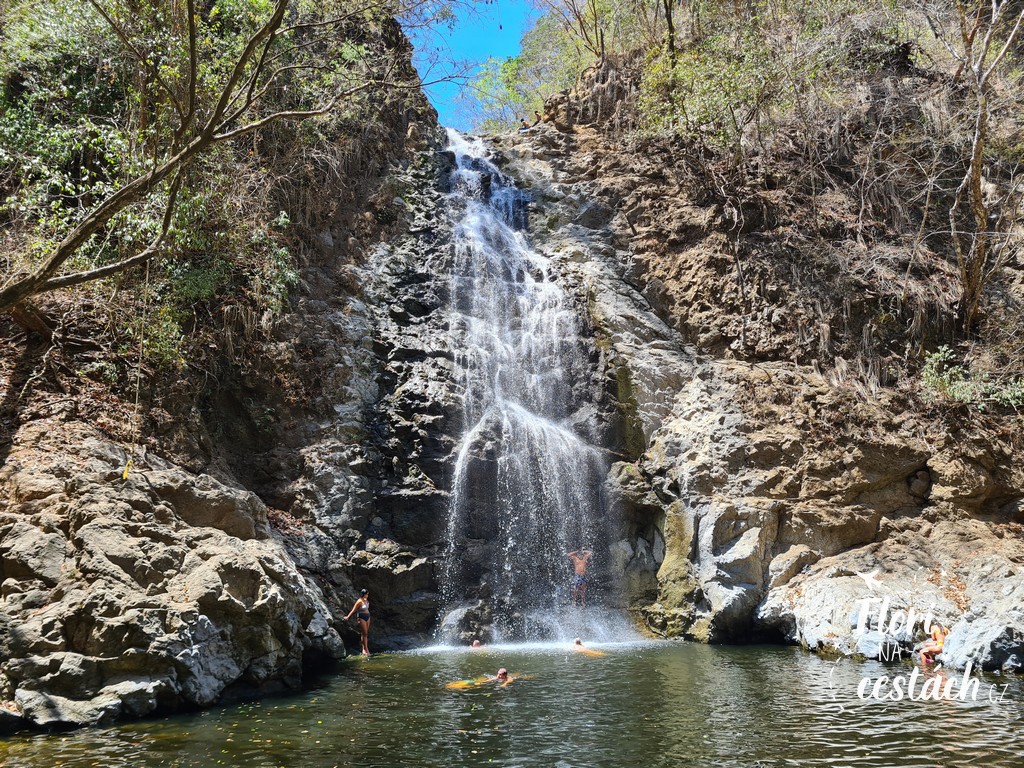
The Nauyaca waterfall itself is made up of two cascades. The upper reaches a height of 43 meters, bottom 18 meters, below it a refreshing lake where you can swim. I have seen many waterfalls, but this one is, in my opinion, one of the most beautiful I have ever been to. Expect the trip from the parking lot to the waterfall and back to take you up to two hours. The good thing is that there is a shelter where you can relax and take a shower while waiting for the shuttle.
Uvita
We chose another accommodation in the town Uvita directly on the Pacific coast. Bungalow in Tropical Beach Hotel, Restaurant & Bar. Two bedrooms, bathroom and living room with kitchenette. Swimming pool on site and beautiful Uvita beach about 5 minutes walk. For relaxation.
And how else would you arrive, check in, pack your swimsuit and head to the beach. The sunset, wow. And the beach? I have no words. We were almost speechless at how amazed we were and how we stood there in awe. Simply perfect beach, a wonderful, warm Pacific and, as a bonus, stingrays racing through the waves at sunset.
National park
But beware. Uvita, including the beach, is national park. And what do you do in the national park? Yes, there is an entrance fee. Which we found out later. Maybe that's why there weren't many people on the beach. So in the evening you swim, watch the sunset, in the morning you go for a run on the beach and watch the sunrise from the other side of Costa Rica (and yes, you still haven't adjusted to the time difference and you wake up at five in the morning), so there's still no one anywhere.
Well, later in the afternoon you come back from your trip, take your swimsuit, go to the beach and suddenly the park ranger wants $6. We're not crazy. We're not going to pay for an hour at the beach. We're Czech, we'll get around it and get there for free... well,... no.
So you have no choice but to ask at the bar where you can go without paying and then you have to get in the car and drive a few kilometers to the next beach. An equally beautiful beach – Playa Hermosa.
Manuel Antonio National Park

70 km from Uvita is Manuel Antonio National Park. The whole town lives on tourism and the park and you can see it. Crowds of tourists everywhere, lots of attractions, restaurants, stalls and everything you don't want to spend money on. And they want to make money on ignorant tourists here. So be careful of that.
Tourist trap!
Before you reach the parking lot and the park, so on the road they stop "„chasers“" asking if you're going to the park. If you say yes, they'll tell you that there are guides, and that you won't see anything in the park without a guide. That you need one and have to pay for it.
And also that it has to be right away because the whole group is leaving in a moment. Plus, they have a private parking lot where they'll take you. Sure, time pressure and ignorance It makes you suddenly pull dollars out of your wallet and pay for nonsense. $20 each!
As you follow the car to the private parking lot, you realize that you bought your park tickets online and that they didn't mention the need for a guide anywhere. So stop. They tricked you! Why should you pay for something you don't need?
They pretend that it's not possible without a guide, but that's nonsense. So you stop, and the toughest ones in the group go. to recover money. A little shouting on the street, deterring other potential business people, and you get your $80 back.
You don't need a guide to any park.

You don't need a guide to (any) park. You can do it on your own here. The guide may know where some animals are and have binoculars, but if you pay attention, you'll definitely come across some too.
The park itself is beautiful though.. If you pass by the other tourists and go a little outside of them, you will come across monkey, maybe some snakes and if you're lucky then sloths in the treetops.
There are also beaches where you can end your trip to the park (the most beautiful is Playa Manuel Antonio). But be careful... the monkeys here are so cheeky and like to they steal anything they come across. So never leave anything unattended and take turns in the water with others.
Part Four: Arenal

After 2 nights by the Pacific (in retrospect we know that it took a day, two more here) we move back inland – to Lake Arenal, which is about 350 km away and the journey will take us almost 7 hours. But if you want to see the best of Costa Rica, there is nothing else to do.
Lake Arenal
Lake Arenal is located in northern Costa Rica and is the largest body of water in the country. It was created by damming the river of the same name in 1974. It is 30 km long and has an area of 85 km².
Arenal Volcano

Above the lake, up high 1657 meters rod Arenal stratovolcano, which is still active and you can still see smoke coming out of it. The most significant explosion in recent times took place in August 2000, it has been quiet since 2010. This is the main purpose of our stay here.
It spreads around the volcano several national parks. Besides, like everywhere in Costa Rica, one place, three parks, three entrance fees. We chose straight away Arenal Volcano National Park. The path brought us to the entrance gate, we paid the entrance fee, as a bonus we got a ticket for the same day to the adjacent park, we parked and set off. There are several routes here too. One leads to the volcano viewpoint (you can't walk directly to the volcano), another leads through the forest, past a huge tree El Ceibo to the viewpoint on the other side of Arenal. The last part of the route leads after lava stones from the eruption in 1991.
The second park we visited here (since it was free) was Arenal Volcano National Park – Peninsula area. Here, while walking along the concrete path, you will come across howlers, who jump above you in the treetops, noses and they say they are at the lake and crocodiles, but we were not lucky with those. There are several viewpoints on the way to Arenal and the lake. Beauty.
Tenorio Volcano National Park

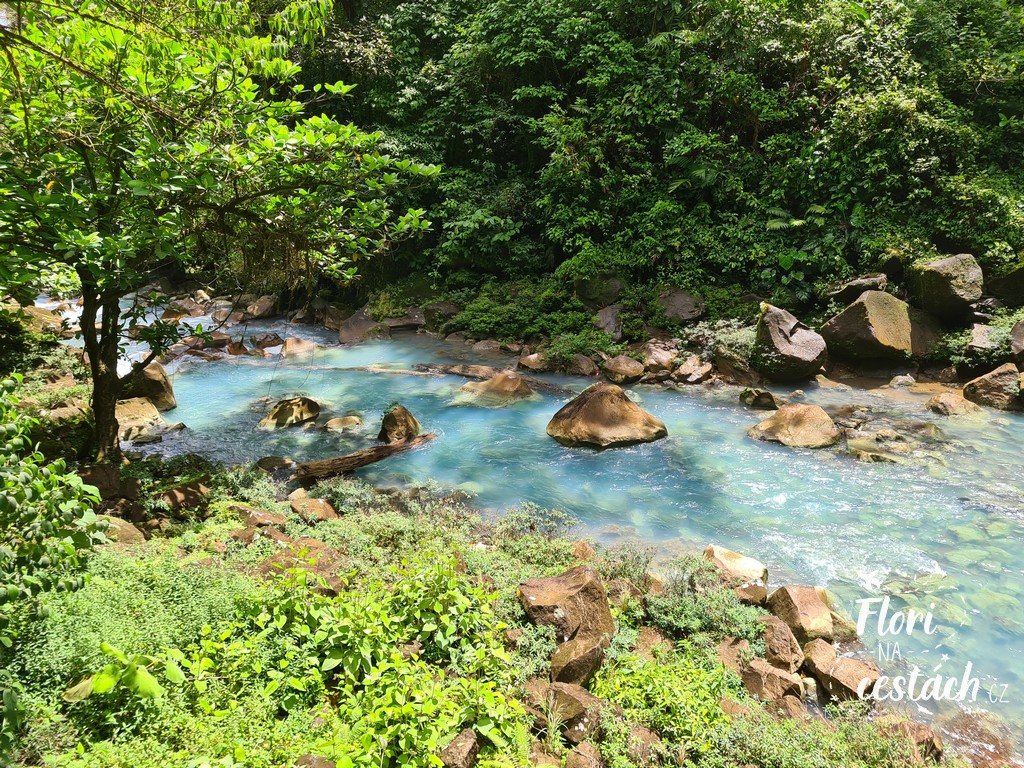
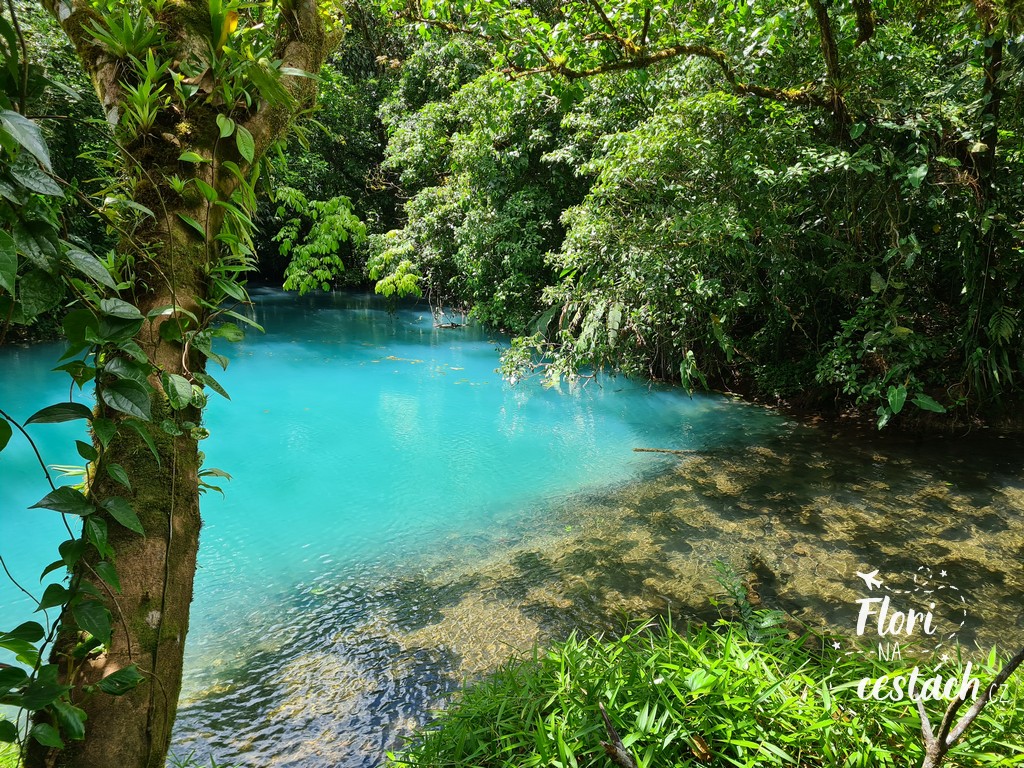
Another highlight of this area is the Tenorio Volcano National Park with its amazing by the azure blue Rio Celeste (approximately 45 km from the accommodation). It is another of the most visited parks. After paying the entrance fee, you walk along a concrete path, which then turns into a forest path.
The first stop is at the waterfall. It leads to a bunch of stairs down and then up again. You walk slowly because on every other step someone is taking a picture with the waterfall (you too, of course). You don't see such colors just like that. When you come down, you can even take pictures under the waterfall without people. You just have to wait a moment and get the right angle.
When you climb the stairs again, you continue along the forest path to Laguna Azul, to Borbollones, which is where it bubbles and the volcano releases its gases here, so you smell sulfur and rotten eggs.
The route ends at a place called Tenidero. It is the point where the special color of the Rio Celeste river is created. It is the confluence of the two Rio rivers Buenavista and Quebrada Agria, which are not colored in themselves.
pH change at the mixing point increases the particle size of the mineral present in the Rio Buenavista. Simply put, this mineral is then deposited on the banks of the river and thanks to refraction of light this arises optical phenomenon and the color of the river. So you can't take the azure water home.
Rincón de la Vieja National Park

Approximately 120 km from Lake Arenal lies Rincón de la Vieja National Park. There is a private road leading to the park entrance, so you drive and suddenly you have across the road barrier. So you pay a dollar for each passenger in the car and continue to the parking lot at the entrance to the park. You pay the entrance fee and go.
They are here three routes. Two are very challenging and lead to hidden waterfalls and the third, the shortest route, is circular and leads around the volcano. Here you can see an active volcano with your own eyes.
There are places where mud bubbles, where smoke comes out... which we didn't see because we didn't read it and went straight to the waterfalls. There was no time for this route because the park was closing. Next time it will be different, okay.
An unforgettable experience
However, even the two routes to the waterfalls are unforgettable experience. Especially when the sun is shining, er, scorching. Part of the path through the forest is shared until you reach a fork in the road. Then you have two options.
On the right, there is a very steep path where you literally jump over old lava rocks and in places the hill is so steep that you have to use your hands to help yourself. But again, the view of the surrounding landscape is simply divine.
The waterfall at the end isn't that amazing, but overall the experience, how you curse the whole way that you climbed there, how hot it is, how your feet hurt, and how the journey never ends, is something that will be etched in your memory and you will never forget it.
Well, and from the waterfall back the same way.
If you still haven't had enough, you can turn left at the crossroads, it's not so much uphill anymore, first a straight line and then a forest, then the forest ends and the sun burns you again, you're going more downhill.

At the end, there's a waterfall and a small lake where you're not allowed to swim, but you don't care because you're already so exhausted and the idea of going back the same way (uphill) is killing you and you need to refresh yourself in the water. Swimming – priceless.
You'll somehow survive the journey back, you'll find out that You can't make it on the circular route anymore., you get in the car and drive 120 km back. Fortunately, most of the way is on the highway.
Part Five: Nicoya Peninsula
We wanted the last 5 days relax and enjoy the beach, sun and ocean. So we left the Nicoya Peninsula for last. We chose accommodation in Eco Chic Hotel Canaima Chill House, in a surf town Santa Teresa, which is located at the very southwestern tip of the entire peninsula.
It was about 250 km and 5 hours drive from Lake Arenal. The final part of the journey was very, very dusty. The asphalt road turned into dust and rocks, and that's how it looked throughout Santa Teresa.
There was a steep hill leading to our hotel, and even with a 4×4 it was a bit of a problem to climb up in the omnipresent dust. The dust was constantly being wiped off in the common areas, but the accommodation was luxurious. Exactly the chill we had imagined.
Santa Teresa

Santa Teresa is famous surf resort, and that's what it looks like there too. Lots of people everywhere.
But the beach is huge and spacious, so it's not a problem to find a place that's not so crowded. The waves are not too harsh and even a complete beginner can try surfing. So us too.
We tried and that was enough. Maybe if we had watched a YouTube video before spending half a day trying to jump on a surfboard and ride a wave like a self-taught person, it would have helped.
We blinked, but it was too late. The next day our legs and arms were so sore that we gave up any new attempts at surfing. Well, maybe another time. We know how to do it now :D
The Pacific in this part of Costa Rica is also pleasantly warm, so you can enjoy swimming and sunbathing here. At sunrise and sunset you can watch surfers who, unlike you, can do it and ride wave after wave. While you're at it, you open a bottle of wine... The next day you throw a hammock between two palm trees on the beach and just chill and enjoy the peace.
Montezuma

Even though there are a lot of places to see on the Nicoya Peninsula, due to the long crossings, we only visited the Montezuma Falls.
Approximately 16 km, half an hour's journey. The path to the waterfalls (which are free) is partly on stones in the riverbed, partly along its banks. Montezuma is cascade of three waterfalls. The first one you come across on the way is the bottom one and it is the highest. It reaches 40 meters. The middle waterfall is a bit hidden and is tall. 12 meters and the highest one has 5 meters.
You can get to the lower waterfall easily, you have two options for the upper one. We tried both. Of course, the harder one to the top, where you climb almost perpendicular wall, you hold on to trees, roots and stretched ropes. It's not dangerous, you just need to really hold on in some places.
All waterfalls have pools suitable for swimming, and we took advantage of that. We then walked back along an easier route, along private land, where a man with a piggy bank and it cost a dollar each. But probably easier than climbing down the rope again.
Not far from the waterfalls is another beach – Montezuma, which we tried. To be honest, we didn't like it very much. There were a lot of waves in the water and there was a strange foam. So we didn't swim much and after a while we went back to Santa Maria. Maybe if we walked further along the beach... but we'll save that for next time.
Part Six: San Jose

During our three weeks we made one change that we hadn't planned in advance. We shortened our stay in Santa Teresa by a day and They booked a hotel in San Jose last night.. We found one that provided for about $20. airport transfer.
Santa Teresa is about 320 km from San Jose, which is over 6 hours of travel and catching a morning flight and returning the car could be complicated. With this change, we solved it for good, and on the last evening we looked around the center of the capital, which we otherwise only drove through a few times. Oh and the photos… I somehow forgot to take photos in San Jose. I guess I was just tired.
How much did Costa Rica cost?
There were four of us traveling to Costa Rica. That's why we calculated the costs of renting a car and all the accommodations. Each accommodation had 2 bedrooms and there was no problem finding one. We bought the tickets at the beginning of January, we flew at the end of February. The total amount spent was approximately 70,000 CZK (in 2022). And of that (rounded amounts):
- 17,777 CZK airfare
- 12,000 CZK accommodation
- 11,000 CZK car rental
- 30,000 CZK for everything else – entrance fees to parks, food (mostly shopping in supermarkets), gasoline.